
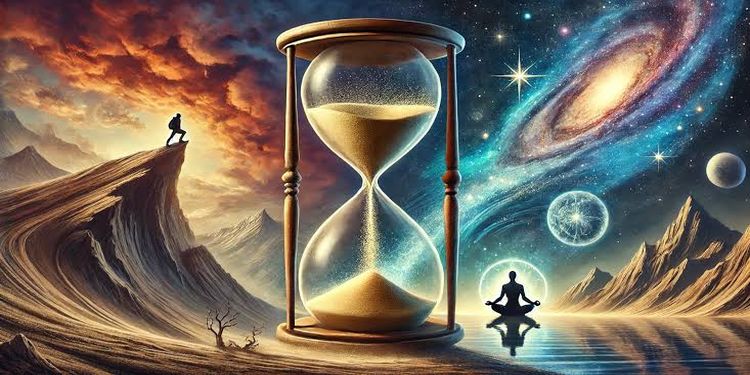
«Бог помер! Бог не воскресне знову!»
Ф. Ніцше.
Третє тисячоліття від Різдва Христового розпочалося під фанфари Зла. Проголошене Христом «Хай буде все єдиним!» не зреалізувалося. Цей заклик умертвила Церква, проголосивши вустами своїх апологетів незбагненність троїстої природи Бога, що похитнуло віру в Нього, запричинило відхід у небуття досвіду релігійного позитиву. Похитнулося й розвалюється все, на чому мав би стояти людський світ: мораль, культура, природничі знання, історієтворчі соціологеми. Інтелектуальна безпорадність упереміш із песимізмом щодо пізнання Бога розв’язала руки Злу в образі повсюдного розокремлення для нищення Людини.
У відкритих листах до Іоанна Павла II від 1 вересня та 24 жовтня Року Божого 1998 я уклінно просив його проблаговістити необмежені можливості людського розуму в пізнанні Трійці та зняти сповідуване християнством табу на її збагнення. Як свідчення того, що Святу Трійцю людський розум пізнати спроможний, я надіслав Його Святості свою книгу «Тригнозис», в якій виклав основи нової епістемології, що уреальнює осягнення триіпостасного Бога. Мною з’ясувалося: Бог і Людина в онтологічній сутності Одне, тотожні.
Сумую, що Папа не озвався на мій лист. Я зрозумів чому. Табу на осягнення Святої Трійці через розум — це заборона на Істину, яка кладе кінець релігійній свідомості.
Церква проголосила троїстість Бога таємницею таємниць, основою і вершиною всіх таїн, перебуваючою поза межею будь-якого людського розуміння після одкровення її самим Богом. Згідно з теологом Григорієм Ніським, одне можна лише знати: «Божеська Одиниця тотожна Трійці, і Трійця, в якій роздільність і єдність незбагненні, міститься в Одиниці». Августин Блаженний констатував: «Святу Трійцю можна збагнути лише на небесах… Що вона таке — не сказати, цього не може пояснити навіть мова янгольська, а тим паче людська». Він заявив, що зазнав славної поразки в розумовому збагненні Трійці. А Григорій Богослов вдався до такого порівняння: «Якби хтось і зробив спробу збагнути Трійцю, то з ним сталося б те, що буває з голосом при надмірній напрузі, чи те, що трапляється із зором, що слабшає, ба, навіть цілковито згасає, коли намагається вловити сонячний промінь».
Бог (Свята Трійця) є необ’єктивованою реальністю і пізнати Його, спираючись на принципи формальної логіки, дійсно неможливо. Таке пізнання приречене на провал, на «згубну об’єктивацію смислу», що і засвідчили всі формально-логічні спроби осмислити Трійцю з боку раціональної філософії, котра перебуває під знаком об’єктивації. Знаменитий Кант у «Критиці чистого розуму» визнав, що довести існування триіпостасного Бога раціональним способом неможливо, а відомий філософ Микола Лоський зазначив: «Троїстий догмат є хрест для людської мисли… Ніяка спекулятивна філософія ніколи не змогла піднятися до таїни Пресвятої Трійці».
Микола Бердяєв, визнаючи стать за «онтологічну основу світової дійсності, в якій схована метафізика духу і метафізика плоті, таїна світового процесу, перетворюваність і цілісність світу», зазначив: «До богосвідомості Людина йшла від власної людської природи, а не завдяки якомусь одкровенню Бога. Ідею Бога дано Людині не звідкілясь іззовні як думку від Бога, а предметно-фактично здійснену в ній природою її особи як живого образу Бога. Якби людина не усвідомлювала природи своєї особи, вона не змогла б мати й уявлення про реальне існування божества, і жодна надприродна дія ніколи не заклала б у неї цю свідомість, оскільки своєю людською свідомістю Людина змогла б сприймати лише реальність чуттєвого світу».
Мовлене Бердяєвим означає, що релігійна ментальність виникає із реальності Бога як першообразу Людини. Тож Бога (Святу Трійцю) можна пізнати через природу самої людини. Як саме? Ряд мислителів вказував на пізнання Бога через стать. Зокрема, Василь Розанов вважав, що християнська релігія — то релігія таїнства статі. А Дмитро Мережковський прямо стверджував: «Стать є божественна в людському тілі Троїстість».
Але в історії філософії не з’являвся мислитель, котрий би пізнав онтологію статі і розгадав таїну Святої Трійці та на цьому переінакшив нашу уяву — хто ми є насправді в тілесній і суб’єктній цілісності. Перешкодою у цій справі був концептуальний і дефініційний хлам, накопичений пізнанням на основі ідеї дискретності протягом усієї історії філософії, релігії і науки, а також незнання сутності статі.
Знаменитий Лейбніц справедливо наголошував: «Пізнання повинно базуватися на неперервності — головному законі Природи, на якому лише й може ґрунтуватися істинна філософія». Через недотримання цієї умови тілесність Людини була зведена до фікції — неіснуючого в онтології життя «дискретного індивіда» — і в такому прояві визнана «принципово нецілісною», «розірваною», «тілесно не завершеною істотою». Ця «розірвана людина» і стала константою в глобальній системі антропологічних знань, кардинальною точкою, навколо якої все обертається в релігії, філософії та соціології. На ній сформовані всі світоглядні системи, всі соціальні проєкти, які повсякчасно відлунюються ворожнечею, війнами для людства.
Тож до пізнання таїни Святої Трійці необхідно було перезавантажити розум про сутність Людини знаннями на основі принципу неперервності.
Іншою перешкодою на шляху до пізнання Святої Трійці була загадка статі, з природою якої з давнини пов’язувалася ідея «надлюдини». Проте таємниця статі поставала однією з найбільших загадок у пізнанні. Про неї казали, що людство ніколи її не розгадає. Відомий дослідник історії науки Валеріан Лункевич зазначав: «Стать — Мінотавр, який безжально пожер сміливців, що заходили до лабіринту навіть у всеозброєнні морфологічної та історичної ерудиції».
Наявність статі є «найфундаментальнішою ознакою життя, одним із тих основних законів, які програмують існування світу від першої миті його створення» (Катрфаж). У всіх групах організмів, починаючи від бактерій та вірусів, діє статевий механізм, який дозволяє генам рекомбінуватися.
У другій половині ХХ століття докторською дисертацією мною аналізувалася стать у царині тваринного та рослинного світу. Заглибившись у пізнання походження біологічних видів, я запримітив дію закону періодичного повторення (чергування) появи форм з розділенням статевих полярностей і форм гермафродитних. Періодична повторюваність гермафродитних форм і форм з розділенням статевих полярностей рясніє у найрізноманітніших пунктах рослинного родоводу. Це саме зустрічається і в різних типах тваринного світу (найпростіші, губки, кишковопорожнинні, гребневики, плоскі черв’яки, нематодогельмінти, немертини, молюски, анеліди, членистоногі, фороніди, мохуватки, брахіоподи, птеробрахії, голкошкірі, погонофори, хордові). У групах, для яких типове розділення статевих полярностей, є окремі гермафродитні роди та види, а серед груп типових гермафродитів можна виявити окремі роди і види з розділенням статевих полярностей.
Я з’ясував, що дія заприміченого закону зумовлена взаємоперетворенням статевих полярностей одна в одну як у своє «друге» і своє «третє» («я — це ти»), уподоблюючим періодичний «рух у рівновазі і рівновагу в русі». Ось, гляньмо, якою буває реально ситуація з біологічним видом: особина спочатку самиця, згодом перевтілюється в гермафродита, а через певний час гермафродит перевтілюється в самця, який згодом перетворюється в гермафродита, а гермафродит з часом перевтілюється у самицю; особина спочатку самець, який згодом перевтілюється в гермафродита, а через певний час гермафродит перевтілюється в самицю, яка перевтілюється в гермафродита, а гермафродит — у самця; особина спочатку гермафродит, згодом перевтілюється або в самицю, або в самця, а через певний час ці двоє перевтілюються в гермафродита, а гермафродит згодом перевтілюється або в самця, або в самицю.
Ці явища насправді засвідчують, що «дискретного індивіда» не існує, а є неперервна трансформаційно-триполярна за природою реальність, три «іпостасі» (полярності) якої поєднані між собою як взаємопроникні, зумовлюють одне одного, нероздільні, перебувають на одному онтологічному рівні, тобто існують в одномоментності, і засвідчують себе в статусі троїстого Єдиного як носія тілесності «життя». Іншими словами, те, що нашим чуттям здається як три статі в образі дискретних індивідів – чоловіка, жінки та андрогіна (арифметичної трійки 1+1+1=3), насправді, є ілюзією, за якою приховується трансформаційно-триполярний характер природи матерії, уособлений образом онтологічної троїстої Одиниці, перебуваючої у розвитковому стані та унеможливленої бути розірваною на три дискретні арифметичні одиниці.
Прийшло прозріння, що онтологічно природа всезагальної матерії троїста, а за виникненням примари «дискретного індивіда» стоїть об’єктивація Єдиного, чуттєвий «розрив» його на самостійні полярності, яких ми помилково приймаємо в якості трьох дискретних «статей» — чоловічої, жіночої, андрогінної. Статично уреальнюючись у фальшивому статусі трьох окремих «статей» і стаючи «дискретними індивідами», ці полярності, відірвані від істинної статі як трансформаційно-триполярного Єдиного, усимволюють собою «розрив» вічності — появу історичного часу і простору у вигляді зовнішнього математизованого (тривимірного) світу Множинного, який і створює головну трудність для філософів — зрозуміти відношення неперервного і дискретного.
Ось цей примарний світ дискретного Множинного біологічних видів, структурно представлений фальшивою «статтю»: самиця і гермафродит; гермафродит і самець; самиця, гермафродит і самець; самиця і самець; лише одна самиця; лише один гермафродит… Це вже світ об’єктів — «часове поцейбіччя дискретного Множинного».
Видатний мислитель, комі за національністю, Василь Налімов геніально зазначив: «Життя і час у нашому уявленні про Всесвіт з’являються тільки після того, як у неперервному виділяється дискретне; відмова від дискретності породжує в нашій свідомості інший Всесвіт, створюючи уявлення про позачасове життя в системі понять, позбавлених подвійного протиставлення».
А Микола Бердяєв вказав на конкретну причину появи Множинного: «Зовнішня об’єктність і предметність пов’язані зі статевою розірваністю…. Зі статтю пов’язане виникнення об’єктного феноменального світу, і тут є точка, в якій вирішується доля світу і людини… Таїна цього світу схована в об’єктивації… Розриваючи матеріальну вічність, об’єктивація статі породжує простір і час, історичність, а тому подолання об’єктивації означає подолання часу, відчуженості і ворожнечі. Людина викинута в об’єктивований світ, і найголовніше завдання, що стоїть перед свідомістю, — перестати об’єктивувати, перестати створювати фікції шляхом перетворення неперервного в перервне, в об’єкт, у самостійну сутність, втілену у предметні форми, образи тощо».
Дійсно, як мовить Бердяєв, «істина не відкривається в об’єктивації, світ об’єктивований не представлений як ціле, і тому в ньому нема істини». В об’єктивації статі людина перетворюється у «дискретного індивіда». Як наголошує Бердяєв, «в об’єктивації людина зникає, перетворюється у фікцію, в суб’єкт-об’єкт — виразника світової непристойності і рабства». А отже, каже він, «перетворення світу є насамперед подолання розриву статі».
Якою ж є істинною Людина поза розривом статі? Багаторічні мої дослідження з’ясували — стать — це трансформаційно-триполярна характеристика онтологічної природи всезагальної матерії, а отже, увесь Всесвіт антропологічний, є тілесно цілісною Людиною-Всесвітом.
Більше того, трансформаційна триполярність Людини-Всесвіту — це її Онтологічний Суб’єкт (ТриЕго) — носій свідомості, первісний апріорний троїстий дух, світовий розум, визначальник ідейності всього сущого, предтеча інформації як такої і в той же час — проєктант триплетної організації продуктів розвитку матерії та їх об’єктивізатор.
Чим же тоді насправді є ми — земні люди, «викинуті» в об’єктивований світ? Ми — онтогенезні модуси полярностей Онтологічного Суб’єкта, його відображувальні, пізнавальні та твірні «органи» як індивідуальні (а не дискретно-індивідні) суб’єкти, обтяжені дискретним баченням себе в ілюзорному статусі «дискретних індивідів». Саме дискретне себебачення перешкоджає нам зрозуміти, що онтологічна троїстість є кодом Світового Розуму.
Але, навіть ведучи мову про арифметичну троїстість (1+1+1=3) зовнішнього світу Множинного, варто запитати: чому все розмаїття істот представлене самцем, самкою і гермафродитом; чому електрон, протон і нейтрон є трьома «першоцеглинками», з яких, як думають хіміки, складена вся речовина; чому заряди «елементарних часток» обмежені трьома можливостями +1, -1 і 0; чому рух кварків здійснюється трійками і чому кожний кварк може перебувати тільки в трьох відмінних проявленнях; чому перенос явищ слабких взаємодій здійснюється триплетом бозонів W+, W-, Z⁰ (слід також вказати на триплетний стан, триплет-триплетну анігіляцію, триплет-триплетну абсорбцію тощо); чому генетичний код триплетний (три нуклеотиди кодують одну амінокислоту); чому вся гама кольорів твориться трьома вихідними кольорами — синім, жовтим, червоним?…
І чому троїсті онтологічні конструкти, як: давньокитайське Дао; індуські: Брахман, Пракрит, Тримурті; християнська Свята Трійця; чанське Єдине, піфагорійська Божеська Верховна Одиниця та інші?
Український мислитель Григорій Сковорода назвав троїстість «всеоб’єднуючим триначалом», «трисонячним прісносущим центром пресвятої вічності, на якому увесь світ стоїть і з якого все виджерелюється». Богослов і вчений Павло Флоренський каже: «Цілість троїста, троїстість є найбільш загальною характеристикою буття, кожний його шар, кожний його рід має ще свою специфічну троїстість». Сен-Мартен обґрунтовував дію у Природі універсального закону Єдності і Троїстості. Найнижча (арифметична) троїстість звернена до речей чуттєвого світу і знаходиться в часі, а найвища троїстість є нероздільною і вища від часу.
Знайомство з міфологічним, релігійним та філософським світобаченнями дозволяє запримітити троїстість вихідною основою двох ліній опису буття сущого — лінію triadè, що спирається на арифметичну троїстість, і лінію trinitè на основі онтологічної троїстості.
Зрозуміло, що дискретне світосприймання не бачить Людину цілісною, її сутності без дискретної індивідності, навпаки, творить «погану множинність» — фантомних «статей» з полярностей істинної статі. Відсутність пізнання Людини онтологічною логікою заполонила розум релігійною свідомістю, упристолила цілісну Людину «Богом», а її полярності перевела в статус «людей-дискретних індивідів», котрих християнство поіменовало «гріхопадними» та закріпостило церковникам і всяким «п’яними розпутним святим батькам», «пузатим попам» (вислови Тараса Шевченка).
Для відкриття Людини цілісної придатна лише онтологічна логіка, яка спирається на троїсту природу матерії. Тригнозис — це пізнання в інформаційному режимі застосування одного-єдиного принципу — принципу онтологічної троїстості матерії. Він — єдина методологія, яка розв’язує центральну колізію матерії і духу — відношення Єдиного і Множинного, неперервного і дискретного, внутрішнього і зовнішнього, онтологічного і суб’єкт-об’єктного.
Будучи закоріненим у трансформаційно-триполярну природу всезагальної матерії, Тригнозис є методом необ’єктивованого пізнання Людини, а отже, виявляє її антропологічним Всесвітом. Це логіка пізнання, за якої предмет і метод дослідження збігаються («мислити і бути — одне»). Тож можна сказати і так: цілісно матерія пізнається тому, що є Людиною і окрім Людини ніяких інших Абсолютів не існує, включно зі всілякими богами.
Релігійну свідомість породило відчуття існування цілісної Людини. Віра в існування Бога як надіндивідної (безіндивідності) особистості міститься в природі самої Людини і є догадкою Людини про свій онтологічний цілісний первообраз як троїсту необ’єктивовану реальність.
Неважко збагнути, що вся онтологічна основа християнства тримається на статі. Ось слова апостола Павла про стать: «Ця таємниця велика є». Тайність статі, заявляли богослови, «перевищує категорії нашого розуму, і її розкриття зіставне лише з таїною Пресвятої Трійці».
У християнстві різниця між Богом і людиною традиційної назви («дискретним індивідом») розглядається через «розрив» та «зцілення» статі. Нецілісна («гріхопадна») людина — це істота з «лукавим розтином статі», представлена дискретним індивідом, а Бог — триіпостасна, без фальшивої статевості цілісна реальність. Христос набуває статус Бога, долаючи «розрив» статі, фальшиву індивідність, стає ні «чоловіком», ні «жінкою», ні «андрогіном», але залишається троїстим за природою.
Таємниця Бога і релігійної свідомості розкривається через природу статі шляхом вирішення антиномії індивіда і триєдності. Людина без дискретної індивідності — це і є ще недосконала троїсто-цілісна Людина в християнстві, яку воно подає за «триіпостасного Бога».
Відомий богослов і вчений Павло Флоренський у праці «Стовп і утвердження істини» говорить про онтологічну засадничість троїстості у бутті, але помилково запевняє, що «триіпостасність Бога недоступна розумові, шлях до неї пролягає тільки через віру». Він каже: «Бог вищий від будь-якої логіки, і троїсте число божеських іпостасей дедукувати неможливо».
Критикуючи Канта за намагання через космологічні антиномії вивести саму можливість розуму, Флоренський стверджує — розум можливий тільки за умови, якщо йому заздалегідь притаманна онтологічна істина, тотожна триіпостасній Єдності (Богові), і пророкує пекельні муки кожному, хто прагне добутися високого знання, не прийнявши «трансцендентної» троїстості.
«Людський розум у своїй земній діяльності, — мовить Флоренський, — страждає від роздвоєння та розпаду, ними затавроване гріховне життя. Іноперетворення розуму мусить виражатися в зціленні цього гріховного розпаду та роздвоєння. Істина є «суще всеєдине», безконечний акт трьох у Єдності, споглядання Себе через другого в Третьому… Суб’єкт Істини — це відношення трьох, але — відношення, що є субстанцією, відношенням-субстанцією… Істина — Безконечний акт Трьох у єдності… Вона є цілісна сутність у трьох іпостасях».
За вихідне начало пізнання Флоренський приймає «трансцендентну» (приховану) троїстість, але ж судження, до яких безпосередньо спричиняється чуттєвий досвід, мають емпірико-зовнішнє походження. Тож Істина (триєдність) Флоренським лише оголошується відправною даністю, а її пізнання, розкриття через розум в іманентному їй матеріальному житті заперечується. Звідки ж тоді, запитується, взялося онтологічне троїсте число Божеських іпостасей? Флоренський каже: «Бог звиш логіки», і це число просто постає як сторона безконечного факту, як момент переживання нашим серцем Божества, а не дедукується з Божества.
З’ясування через розум онтологічної триіпостасної природи Бога, за Флоренським, «не можливе, бо вихід через розум в Триєдність, в надіндивідну сутність, перевтілення в Триіпостасність вимагає зречення від своєї індивідності, тобто від самого себе, а це людині — індивіду не дано».
Тут Флоренський глибоко помилився. Дискретного індивіда в онтології життя взагалі не існує. Антиномія індивіда і триєдності вирішена мною при розгадці природи статі, тож ніякого «зречення від індивідності при перевтіленні себе в Триіпостасність» не потрібно.
Задовго до мого вирішення антиномії індивіда і триєдності видатний уродженець української землі і вигнанець із імперської Росії Микола Бердяєв констатував: «Загадкою сутності Людини є стать, вона основа світової дійсності, космічна сила, що абсолютизує космічну єдність буття… В ній схована метафізика духу і плоті, таїна світового процесу, перетворюваність і цілісність світу».
При цьому Бердяєв коротко і точно мовив: «Відношення Єдиного і Множинного — оце і вся загадка буття». На шлях до її розгадки, окрім Бердяєва, вказав і відомий мислитель з українськими генами Дмитро Мережковський: «Стать — перекинутий міст над прірвою Єдиного і Множинного».
Цю загадку буття пізнавали мої багаторічні дослідження. З’ясувалося, що стать — це трансформаційно-триполярна природа всезагальної матерії, що свідчить про її антропологічність. Поділ буття на «живе» і «мертве» абсурдний, воно існуюче як цілісна реальність.
Видимість наявності його статично-дискретної індивідності є позаонтологічною, вона виникає на базі чуттєвості, якій непідвладне охоплення онтологічної цілісності та розвитку троїстого буття в необ’єктивованій вічності.
Де ж тоді, спитаєте, взявся «дискретний індивід»? Повторюю: він — уособлення об’єктивації полярностей статі, якою замикається тілесність Людини у відокремленому індивідному існуванні, «відсікається» її онтологічна єдність з матерією, чим і пояснюється виникнення «цьогосвітності» — екстеріоризованого дискретного світу як позірного перетворення Єдиного на Множинне.
Тригнозис долає об’єктивацію, усуває розділення на «потойбічне» і «поцейбічне», «божественне» і «людське», розвертає пізнання в інший світоглядний простір, вилучає релігійне світобачення. Бог помер через воскресіння Людини цілісної, безіндивідної, необ’єктивованої як Боголюдини.
Таїна Бога збагнута через кореляційне відношення між його триіпостасністю і триполярністю статі, яка, висловлюючись вустами богословів, «міститься в акті творення як проявленні Бога в самій боголюдській єдності».
Сукупно повна версія створеного мною світогляду викладена в книгах:
Харченко П. А. Антиномия индивида и триединств. — К.: Агропром, 1986. — 812 с.
Харченко П. А. Від індивіда до Боголюдини. — К.: УАОІ. — 1993. — 134 с.
Харченко П. А. Тригнозис. — К.: Аграрна наука. — 1998. — 400 с.
Харченко П. А. ТриЕго. — К.: Фенікс. — 2008. — 420 с.
Харченко П. А. Необ’єктивована Людина. — К.: Фенікс. — 2013. — 248 с.
Харченко П. А. Предисловие к постистории. — К.: Фенікс. — 2015. — 396 с.
Харченко П. А. Откровение Человека без «лукавого сечения» пола. — Кам’янець-Подільський: Рута. — 2018. — 376 с.
Харченко П. А. Расчеловечивание индивида. — К.: Фенікс. — 2022. — 160 с.
Харченко П. А. Зміна статусу Бога і смерть об’єктивованої «людини». — К.: Фенікс, 2019. — 104 с.
Харченко П. А. Вихід Людини з історії. — К.: Фенікс. — 2023. — 72 с.
Petro Kharchenko. The Rediscovery of Man (та інші публікації на авторській сторінці у Фейсбуці).
THE CHANGING STATUS OF GOD
AND THE DEATH OF THE OBJECTIFIED “MAN”
The third millennium from the birth of Christ began under the fanfare of Evil. Christ’s proclaimed “That all may be one!” was never realized. This call was put to death by the Church, which, through the mouths of its apologists, proclaimed the incomprehensibility of the triune nature of God. This shook faith in Him and caused the experience of religious positivity to fade into oblivion. Everything upon which the human world was meant to stand has been shaken and is now collapsing: morality, culture, natural science, and history-building sociologemes. Intellectual helplessness, mixed with pessimism regarding the knowledge of God, has given free rein to Evil in the guise of universal fragmentation aimed at the destruction of Man.
In open letters to John Paul II dated September 1 and October 24 in the Year of our Lord 1998, I humbly implored him to proclaim the boundless capabilities of the human mind in knowing the Trinity and to lift the taboo upheld by Christianity on comprehending it. As evidence that the human mind is capable of knowing the Holy Trinity, I sent His Holiness my book *Trignosis*, in which I set out the foundations of a new epistemology that makes the comprehension of the tri-hypostatic God a reality. I ascertained that God and Man are one and identical in their ontological essence.
I am saddened that the Pope did not respond to my letter. I understood why. The taboo on comprehending the Holy Trinity through reason is a ban on the Truth, which brings an end to religious consciousness.
The Church has proclaimed the triunity of God as the mystery of mysteries, the foundation and pinnacle of all mysteries, lying beyond the bounds of any human understanding after its revelation by God Himself. According to the theologian Gregory of Nyssa, only one thing can be known: “The Divine Monad is identical to the Trinity, and the Trinity, in which separateness and unity are incomprehensible, is contained within the Monad.” Blessed Augustine stated: “The Holy Trinity can be comprehended only in heaven… What it is cannot be told; not even the tongue of angels can explain it, let alone human speech.” He declared that he had suffered a glorious defeat in his mental comprehension of the Trinity. And Gregory of Nazianzus resorted to the following comparison: “If anyone were to attempt to comprehend the Trinity, there would happen to him what happens to the voice under excessive strain, or what happens to the sight when it weakens and even completely fades away while trying to catch a sunbeam.”
God (the Holy Trinity) is an unobjectified reality, and it is indeed impossible to know Him relying on the principles of formal logic. Such knowledge is doomed to failure, to the “pernicious objectification of meaning,” which has been demonstrated by all formal-logical attempts to comprehend the Trinity on the part of rational philosophy, which remains under the sign of objectification. The renowned Kant, in his *Critique of Pure Reason*, acknowledged that it is impossible to prove the existence of the tri-hypostatic God in a rational way, and the famous philosopher Nikolai Lossky noted: “The triune dogma is a cross for human thought… No speculative philosophy has ever been able to rise to the mystery of the Most Holy Trinity.”
Nikolai Berdyaev, recognizing sex as “the ontological basis of world reality, in which is hidden the metaphysics of spirit and the metaphysics of flesh, the mystery of the world process, the transformability and wholeness of the world,” noted: “Man came to the god-consciousness from his own human nature, and not thanks to some revelation from God. The idea of God is given to Man not from somewhere outside as a thought from God, but objectively and factually realized within him by the nature of his person as a living image of God. If man did not realize the nature of his person, he would not be able to have any idea about the real existence of the deity, and no supernatural action would ever instill this consciousness in him, since with his human consciousness Man could only perceive the reality of the sensory world.”
What Berdyaev said means that the religious mentality arises from the reality of God as the archetype of Man. Thus, God (the Holy Trinity) can be known through the nature of man himself. How exactly? A number of thinkers pointed to knowing God through sex. In particular, Vasily Rozanov believed that the Christian religion is the religion of the mystery of sex. And Dmitry Merezhkovsky directly asserted: “Sex is the divine Trinity in the human body.”
However, in the history of philosophy, no thinker has appeared who comprehended the ontology of sex, unraveled the mystery of Holy Trinity, and thereby altered our perception of who we truly are in our bodily and subjective wholeness. The obstacle in this matter was the conceptual and definitional junk accumulated by cognition based on the idea of discreteness throughout the entire history of philosophy, religion, and science, as well as ignorance of the essence of sex.
The famous Leibniz rightly emphasized: “Knowledge must be based on continuity—the principal law of Nature, upon which alone true philosophy can be founded.” Due to the failure to observe this condition, human corporeality was reduced to a fiction—a “discrete individual” non-existent in the ontology of life—and in this manifestation was recognized as “fundamentally incomplete,” “torn,” and “bodily unfinished.” This “torn man” became a constant in the global system of anthropological knowledge, the cardinal point around which everything revolves in religion, philosophy, and sociology. All worldview systems and social projects have been formed upon it, constantly echoing with enmity and wars for humanity.
Therefore, prior to knowing the mystery of the Holy Trinity, it was necessary to reboot the mind regarding the essence of Man with knowledge based on the principle of continuity.
Another obstacle on the path to knowing the Holy Trinity was the enigma of sex, with the nature of which the idea of the “superman” has been linked since antiquity. However, the mystery of sex loomed as one of the greatest enigmas in cognition. It was said of it that humanity would never unravel it. The famous historian of science Valerian Lunkevich noted: “Sex is the Minotaur that ruthlessly devoured the daredevils who entered the labyrinth even fully armed with morphological and historical erudition.”
The presence of sex is “the most fundamental feature of life, one of those fundamental laws that program the existence of the world from the very first moment of its creation” (Quatrefages). In all groups of organisms, starting from bacteria and viruses, a sexual mechanism operates that allows genes to recombine.
In the second half of the 20th century, in my doctoral dissertation, I analyzed sex in the realm of the animal and plant worlds. Delving into the cognition of the origin of biological species, I noticed the operation of the law of periodic repetition (alternation) of the appearance of forms with the separation of sexual polarities and hermaphroditic forms. The periodic repeatability of hermaphroditic forms and forms with separated sexual polarities abounds in the most diverse points of the plant lineage. The same is encountered in various types of the animal world (protozoa, sponges, coelenterates, ctenophores, flatworms, nemathelminthes, nemerteans, mollusks, annelids, arthropods, phoronids, bryozoans, brachiopods, pterobranchs, echinoderms, pogonophores, chordates). In groups typical for the separation of sexual polarities, there are separate hermaphroditic genera and species, and among groups of typical hermaphrodites, one can discover separate genera and species with the separation of sexual polarities.
I have established that the operation of the observed law is determined by the mutual transformation of sexual polarities into one another as their “second” and their “third” (“I am you”), thereby embodying a periodic “movement in equilibrium and equilibrium in movement.” Let us look, for instance, at how the actual situation manifests itself in a biological species: an individual is initially female, later transforms into a hermaphrodite, and after some time the hermaphrodite transforms into a male, who subsequently transforms into a hermaphrodite, and the hermaphrodite eventually transforms into a female; an individual is initially male, later transforms into a hermaphrodite, and after some time the hermaphrodite transforms into a female, who transforms into a hermaphrodite, and the hermaphrodite into a male; an individual is initially a hermaphrodite, later transforms either into a female or into a male, and after some time these two transform into a hermaphrodite, while the hermaphrodite subsequently transforms either into a male or into a female.
These phenomena actually testify that the “discrete individual” does not exist; rather, there is a continuous, transformationally tripolar reality by nature, whose three “hypostases” (polarities) are interconnected as mutually penetrating, determine one another, are inseparable, exist on the same ontological level, that is, exist simultaneously, and manifest themselves in the status of the One as the bearer of the corporeality of “life.” In other words, what appears to our senses as three sexes in the form of discrete individuals — man, woman, and androgyne (the arithmetic triad 1 + 1 + 1 = 3) — is in fact an illusion behind which lies the transformationally tripolar character of the nature of matter, embodied in the image of the ontological threefold Unity, existing in a state of development and incapable of being divided into three discrete arithmetic units.
The realization dawned that the ontological nature of universal matter is triune, and behind the emergence of the phantom of the “discrete individual” lies the objectification of the One, its sensory “rupture” into independent polarities, which we mistakenly accept as three discrete “sexes”—male, female, and androgenic. Statically objectifying themselves in the false status of three separate “sexes” and becoming “discrete individuals,” these polarities, torn away from true sex as the transformational-tripolar One, symbolize the “rupture” of eternity—the appearance of historical time and space in the form of an external mathematized (three-dimensional) world of the Multiple, which creates the main difficulty for philosophers: understanding the relation between the continuous and the discrete.
It is this phantom world of the discrete Multiple of biological species, structurally represented by false “sex”: female and hermaphrodite; hermaphrodite and male; female, hermaphrodite, and male; female and male; only one female; only one hermaphrodite… This is already a world of objects—the “temporal this-worldliness of the discrete Multiple.”
The outstanding thinker, Vasily Nalimov, of Komi nationality, brilliantly noted: “Life and time in our perception of the Universe appear only after the discrete is singled out in the continuous; the rejection of discreteness gives birth to another Universe in our consciousness, creating the idea of timeless life in a system of concepts devoid of dual opposition.”
And Nikolai Berdyaev pointed to the specific cause of the emergence of the Multiple: “External objectivity and objectness are connected with sexual tornness… The emergence of the objective phenomenal world is connected with sex, and here is the point where the fate of the world and man is decided… The mystery of this world is hidden in objectification… Rending material eternity, the objectification of sex gives birth to space and time, historicity, and therefore overcoming objectification means overcoming time, alienation, and enmity. Man is thrown into the objectified world, and the most important task facing consciousness is to cease objectifying, to cease creating fictions by transforming the continuous into the discontinuous, into an object, into an independent essence embodied in objective forms, images, etc.”
Indeed, as Berdyaev says, “truth is not revealed in objectification, the objectified world is not presented as a whole, and therefore there is no truth in it.” In the objectification of sex, man turns into a “discrete individual.” As Berdyaev emphasizes, “in objectification man disappears, turns into a fiction, into a subject-object—an expression of world indecency and slavery.” And therefore, he says, “the transformation of the world is first and foremost the overcoming of the rupture of sex.”
What is true Man beyond the rupture of sex? My many years of research have revealed that sex is a transformational-tripolar characteristic of the ontological nature of universal matter, and therefore the entire Universe is anthropological, being a corporeally whole Man-Universe.
Moreover, the transformational tripolarity of the Man-Universe is its Ontological Subject (Tri-Ego)—the bearer of consciousness, the primordial a priori triune spirit, the world mind, the determinant of the ideality of all that exists, the precursor of information as such and at the same time—the designer of the triplet organization of the products of matter’s development and their objectifier.
What then are we in reality—terrestrial humans “thrown” into the objectified world? We are ontogenetic modes of the polarities of the Ontological Subject, its reflected, cognitive, and creative “organs” as individual (rather than discrete-individual) subjects, burdened by a discrete vision of themselves in the illusory status of “discrete individuals.” It is this discrete self-vision that prevents us from understanding that ontological triunity is the code of the World Mind.
However, even speaking of the arithmetic triunity of the external world of the Multiple, one must ask: why is all the diversity of creatures represented by male, female, and hermaphrodite; why are the electron, proton, and neutron the three “primeval building blocks” from which, chemists think, all matter is composed; why are the charges of “elementary particles” limited to three possibilities +1, -1, and 0; why is the movement of quarks carried out in triplets and why can each quark exist only in three distinct manifestations; why is the transfer of weak interaction phenomena carried out by a triplet of bosons W+, W-, Z⁰ (one should also point to the triplet state, triplet-triplet annihilation, triplet-triplet absorption, etc.); why is the genetic code triplet (three nucleotides code one amino acid); why is the entire gamut of colors created by three initial colors—blue, yellow, red?…
And why do triune ontological constructs exist, such as: the ancient Chinese Tao; the Hindu Brahman, Prakriti, Trimurti; the Christian Holy Trinity; the Ch’an One; the Pythagorean Divine Supreme Monad, and others?
The Ukrainian thinker Hryhoriy Skovoroda called triunity the “all-uniting tri-principle,” the “tri-solar ever-existing center of the most holy eternity, upon which the whole world stands and from which everything wells forth.” The theologian and scientist Pavel Florensky says: “Wholeness is triune, triunity is the most general characteristic of being; every layer of it, every genus of it has its own specific triunity.” Saint-Martin substantiated the operation in Nature of the universal law of Unity and Triunity. The lowest (arithmetic) triunity is turned toward the things of the sensory world and is in time, while the highest triunity is inseparable and higher than time.
Acquaintance with mythological, religious, and philosophical worldviews allows us to notice triunity as the initial basis of two lines describing the being of that which exists—the line of *triadè*, based on arithmetic triunity, and the line of *trinitè*, based on ontological triunity.
It is clear that the discrete worldview does not see Man as whole, nor her essence without discrete individuality; on the contrary, it creates a “bad multiplicity”—phantom “sexes” from the polarities of true sex. The lack of knowledge of Man through ontological logic has flooded the mind with religious consciousness, enthroned whole Man as “God,” and relegated her polarities to the status of “people-discrete individuals,” whom Christianity named “fallen into sin” and enslaved to churchmen and all kinds of “drunken, debauched holy fathers, pot-bellied priests” (expressions of Taras Shevchenko).
Only ontological logic, which relies on the triune nature of matter, is suitable for discovering whole Man. Trignosis is cognition in the informational mode of applying a single principle—the principle of the ontological triunity of matter. It is the sole methodology that resolves the central collision of matter and spirit—the relation of the One and the Multiple, the continuous and the discrete, the internal and the external, the ontological and the subject-object.
Being rooted in the transformational-tripolar nature of universal matter, Trignosis is a method of unobjectified knowledge of Man, and therefore reveals her as an anthropological Universe. This is a logic of cognition where the subject and the method of research coincide (“to think and to be are one”). Thus, one can also say: matter as a whole is known because it is Man, and apart from Man no other Absolutes exist, including all kinds of gods.
Religious consciousness was engendered by the sensation of the existence of whole Man. Belief in the existence of God as a super-individual (non-individual) personality is contained in the nature of Man herself and is Man’s guesswork about her ontological whole archetype as a triune unobjectified reality.
It is not difficult to comprehend that the entire ontological basis of Christianity rests on sex. Here are the words of the apostle Paul about sex: “This mystery is great.” The secrecy of sex, theologians declared, “exceeds the categories of our mind, and its disclosure is comparable only to the mystery of the Most Holy Trinity.”
In Christianity, the difference between God and man of the traditional name (“discrete individual”) is viewed through the “rupture” and “healing” of sex. Incomplete (“fallen”) man is a creature with a “wicked incision of sex,” represented as a discrete individual, whereas God is a tri-hypostatic, whole reality without false sexuality. Christ acquires the status of God by overcoming the “rupture” of sex and false individuality, becoming neither “male,” nor “female,” nor “androgyne,” but remaining triune by nature.
The mystery of God and religious consciousness is revealed through the nature of sex by resolving the antinomy of the individual and triunity. Man without discrete individuality is precisely the still imperfect triune-whole Man in Christianity, which it presents as the “tri-hypostatic God.”
The famous theologian and scientist Pavel Florensky, in his work *The Pillar and Ground of Truth*, speaks of the ontological fundamentality of triunity in being, but mistakenly asserts that “the tri-hypostases of God are inaccessible to the mind, the path to it lies only through faith.” He says: “God is higher than any logic, and the triune number of divine hypostases cannot be deduced.”
Criticizing Kant for his attempts to derive the very possibility of reason through cosmological antinomies, Florensky asserts that reason is possible only under the condition that ontological truth, identical to the tri-hypostatic Unity (God), is inherent in it in advance, and he prophesies infernal torments to anyone who strives to attain high knowledge without accepting “transcendent” triunity.
“The human mind in its earthly activity,” says Florensky, “suffers from bifurcation and disintegration; sinful life is branded by them. The re-creation of the mind must be expressed in the healing of this sinful disintegration and bifurcation. Truth is ‘subsistent all-unity,’ the infinite act of three in Unity, the contemplation of Self through the other in the Third… The subject of Truth is the relation of three, but—a relation that is a substance, a relation-substance… Truth is the Infinite act of Three in unity… It is a whole essence in three hypostases.”
Florensky accepts “transcendent” (hidden) triunity as the starting principle of cognition, yet judgments to which sensory experience directly leads have an empirical-external origin. Thus, Truth (triunity) is merely declared by Florensky as a starting givenness, while its cognition and disclosure through reason in the material life immanent to it are denied. Where then, one asks, did the ontological triune number of Divine hypostases come from? Florensky says: “God is above logic,” and this number simply appears as a side of an infinite fact, as a moment of our heart’s experience of the Deity, rather than being deduced from the Deity.
Elucidating through reason the ontological tri-hypostatic nature of God, according to Florensky, “is not possible, because the exit through reason into Triunity, into a super-individual essence, transformation into Tri-hypostasiness requires renunciation of one’s individuality, that is, of oneself, and this is not given to man-individual.”
Here Florensky was deeply mistaken. The discrete individual does not exist at all in the ontology of life. The antinomy of the individual and triunity was resolved by me when unraveling the nature of sex, so no “renunciation of individuality during self-transformation into Tri-hypostasiness” is required.
Long before my resolution of the antinomy of the individual and triunity, the outstanding native of Ukrainian soil and exile from imperial Russia, Nikolai Berdyaev, stated: “The enigma of the essence of Man is sex; it is the basis of world reality, the cosmic force that absolutizes the cosmic unity of being… Hidden within it is the metaphysics of spirit and flesh, the mystery of the world process, the transformability and wholeness of the world.”
At the same time, Berdyaev briefly and precisely said: “The relation of the One and the Multiple—that is the whole enigma of being.” Besides Berdyaev, the path to its solution was pointed out by the famous thinker with Ukrainian genes, Dmitry Merezhkovsky: “Sex is a thrown bridge over the abyss of the One and the Multiple.”
This enigma of being was explored by my many years of research. It turned out that sex is the transformational-tripolar nature of universal matter, which testifies to its anthropological character. The division of being into “living” and “dead” is absurd; it exists as a whole reality.
The appearance of the presence of its static-discrete individuality is extra-ontological; it arises on the basis of sensuality, which is incapable of grasping the ontological wholeness and development of triune being in unobjectified eternity.
Where then, you will ask, did the “discrete individual” come from? I repeat: it is the personification of the objectification of the polarities of sex, by which human corporeality is locked into a separated individual existence, and its ontological unity with matter is “cut off,” which explains the emergence of this-worldliness—the exteriorized discrete world as the apparent transformation of the One into the Multiple.
Trignosis overcomes objectification, eliminates the division into “other-worldly” and “this-worldly,” “divine” and “human,” turns cognition into another worldview space, and removes the religious worldview. God died through the resurrection of whole, non-individual, unobjectified Man as the God-Man.
The mystery of God is comprehended through the correlative relation between His tri-hypostasiness and the tripolarity of sex, which, in the words of theologians, “is contained in the act of creation as a manifestation of God in the God-human unity itself.”
The cumulatively complete version of the worldview created by me is set out in the books:
* Kharchenko P. A. *Antinomy of the Individual and Triunity*. — Kyiv: Agroprom, 1986. — 812 p.
* Kharchenko P. A. *From Individual to God-Man*. — Kyiv: UAOI, 1993. — 134 p.
* Kharchenko P. A. *Trignosis*. — Kyiv: Agrarna Nauka, 1998. — 400 p.
* Kharchenko P. A. *Tri-Ego*. — Kyiv: Phoenix, 2008. — 420 p.
* Kharchenko P. A. *Unobjectified Man*. — Kyiv: Phoenix, 2013. — 248 p.
* Kharchenko P. A. *Preface to Post-History*. — Kyiv: Phoenix, 2015. — 396 p.
* Kharchenko P. A. *Revelation of Man Without the “Wicked Incision” of Sex*. — Kamianets-Podilskyi: Ruta, 2018. — 376 p.
* Kharchenko P. A. *De-humanization of the Individual*. — Kyiv: Phoenix, 2022. — 160 p.
* Kharchenko P. A. *The Changing Status of God and the Death of the Objectified “Man”*. — Kyiv: Phoenix, 2019. — 104 p.
* Kharchenko P. A. *Man’s Exit from History*. — Kyiv: Phoenix, 2023. — 72 p.
* Petro Kharchenko. *The Rediscovery of Man* (and other publications on the author’s Facebook page).